
Best Portable Power Station for a Refrigerator During a Power Outage (2026)
Last updated: November 8, 2026
Reader-supported: we may earn a commission when you buy through links on this page, at no extra cost to you. It never affects our rankings. Learn more.
When the power goes out, the first thing most families worry about is the refrigerator. Food starts to spoil after about four hours without power, and a full fridge of groceries can cost hundreds of dollars to replace. The best portable power station for a refrigerator keeps it running quietly and safely indoors, with no gas, no fumes and no extension cords through the window.
We compared the most popular battery power stations on capacity, output, backup switchover speed and how long they can realistically keep a fridge cold. Here are our picks for 2026.

Our top picks
| Power station | Fridge runtime | Score | Buy link |
|---|---|---|---|
| EcoFlow DELTA 3 PlusBest overall | About 12–24 hours | 9.1 | Check price |
| Anker SOLIX C1000 Gen 2Fastest recharge | About 12–24 hours | 8.9 | Check price |
| Jackery HomePower 1000 v2Best value | About 12–24 hours | 8.7 | Check price |
| Jackery Explorer 2000 v2Best for longer outages | About 1–2 days | 8.6 | Check price |
| Jackery Explorer 5000 PlusBest whole-home backup | About 2–4 days | 8.5 | Check price |
The best portable power stations for a refrigerator, reviewed
EcoFlow DELTA 3 Plus
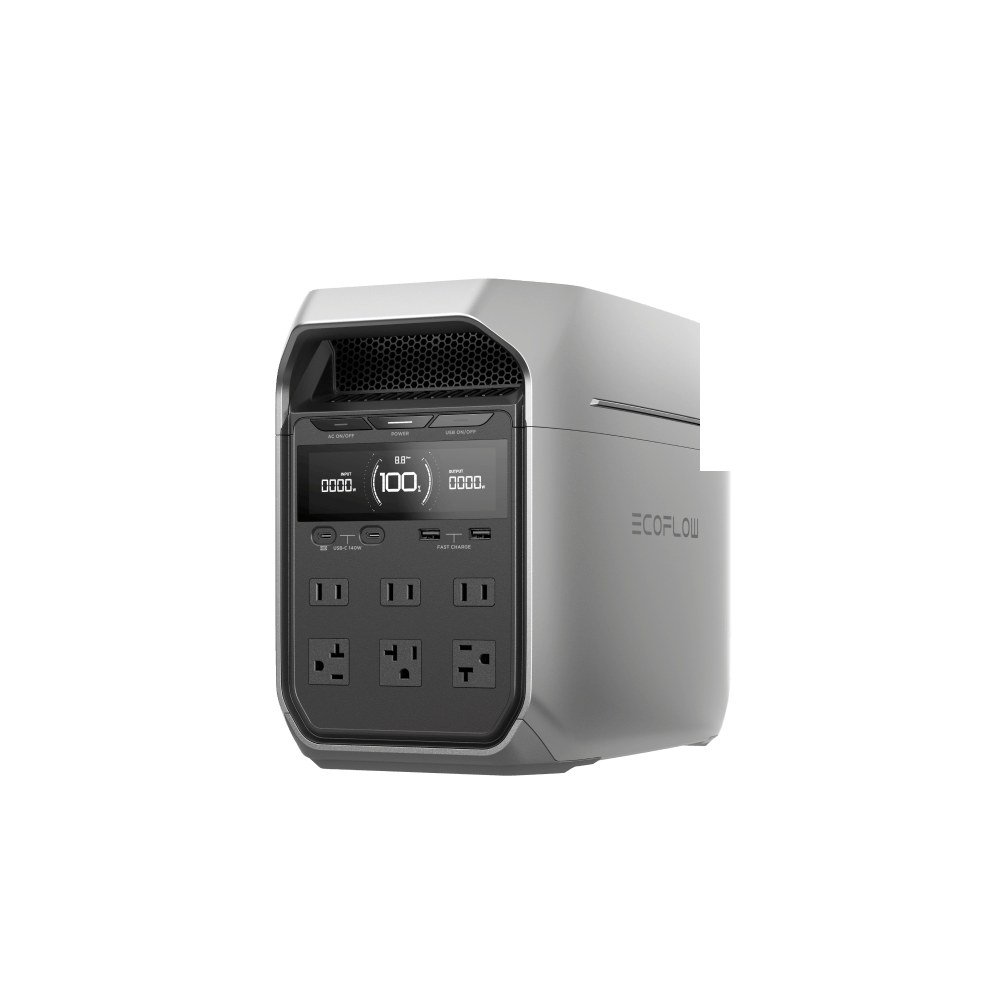
- Capacity1,024 Wh, expandable to 5 kWh
- AC output1,800 W (3,600 W surge)
- BatteryLiFePO4, 4,000 cycles to 80%
- Backup switchoverUnder 10 ms (UPS)
- Recharge0–100% in 56 minutes
- Weight27.6 lb
The DELTA 3 Plus is the power station we would keep plugged in behind the fridge. It sits between the wall outlet and your refrigerator, and if the power cuts out it takes over in under 10 milliseconds, so the fridge never notices.
Its 1,024 Wh LiFePO4 battery can run a typical modern refrigerator for roughly half a day to a full day, and you can add extra batteries later for up to 5 kWh. EcoFlow says it recharges from 0 to 100% in 56 minutes and runs under 30 dB at 600 W.
EcoFlow listed it at $719 in November 2026, on pre-order, with a 5-year warranty.
What we like
- Under 10 ms UPS switchover
- Expandable to 5 kWh
- 56-minute recharge
- 5-year warranty
Watch out for
- Extra batteries add significant cost
- 1 kWh alone may not last a full day with an older fridge
- On pre-order in November 2026
Best for: Most households that want a set-and-forget backup for the fridge and a few essentials.
Skip it if: You expect outages longer than a day and do not plan to add batteries.
Check price on Amazon Price range: $719 at EcoFlow (Nov 2026)
Anker SOLIX C1000 Gen 2

- Capacity1,024 Wh
- AC output2,000 W (3,000 W peak)
- BatteryLiFePO4
- Recharge100% in 49 minutes (UltraFast in the app)
- Backup switchoverUnder 10 ms (UPS)
- Weight24.9 lb
The Anker SOLIX C1000 Gen 2 recharges from empty in 49 minutes with UltraFast mode turned on in the app, which is a big deal during rolling blackouts.
Its 2,000 W output easily handles a refrigerator’s startup surge, it switches over in under 10 ms, and it weighs 24.9 pounds, so it is easy to carry to the kitchen.
Anker says it is not expandable. Anker’s store listed it at $549.99 in November 2026.
What we like
- 49-minute recharge
- Strong 2,000 W output
- Under 10 ms UPS
- Lightest 1 kWh pick here
Watch out for
- Not expandable
- About 1 day of fridge runtime at most
- Fast charging must be enabled in the app
Best for: Areas with frequent short outages or rolling blackouts.
Skip it if: You need to run a fridge for several days straight.
Check price on Amazon Price range: $549.99 at Anker SOLIX (Nov 2026)
Jackery HomePower 1000 v2

- Capacity1,024 Wh
- AC output1,500 W
- Backup switchoverUnder 10 ms (UPS)
- RechargeFull in about 50 minutes
- Battery life6,000+ cycles
- ExtraPriority Routing keeps the fridge on longest
Jackery’s Explorer 1000 v2 is no longer sold on Jackery’s store, and the HomePower 1000 v2 replaces it. Its 1,024 Wh battery gives similar fridge runtime to the EcoFlow and Anker.
Jackery Priority Routing can switch off less important devices when the battery reaches a level you set, so the fridge and router keep running longer. It switches over in under 10 ms and recharges in about 50 minutes.
Its 1,500 W output is lower than rivals but still plenty for a standard refrigerator. Jackery’s store listed it at $549 in November 2026.
What we like
- Priority Routing for the fridge
- Under 10 ms UPS
- 6,000+ cycle battery
- Quiet under 30 dB
Watch out for
- Lower 1,500 W output
- Not expandable
- Weight not listed by Jackery
Best for: Budget-minded households that want a reliable fridge backup.
Skip it if: You want to power a fridge and a microwave together.
Check price on Amazon Price range: $549 at Jackery (Nov 2026)
Jackery Explorer 2000 v2

- Capacity2,042 Wh LiFePO4
- AC output2,200 W (4,400 W surge)
- Backup switchoverUnder 20 ms
- Recharge0–100% in about 1.7 hours
- WeightAbout 39.5 lb
- NoiseUnder 30 dB
If outages in your area last a day or longer, double the battery makes a big difference. The Explorer 2000 v2 stores 2,042 Wh, which Jackery says keeps a fridge, Wi-Fi and lights powered through a full-day outage.
It has a 4,400 W surge rating for stubborn compressors, switches over in under 20 ms and recharges in about 1.7 hours.
The trade-off is weight: at about 39.5 pounds it is a two-hand carry. Jackery’s store listed it at $999 in November 2026.
What we like
- About twice the runtime of 1 kWh models
- Strong 4,400 W surge
- 1.7-hour recharge
- Quiet under 30 dB
Watch out for
- Heavy at about 39.5 lb
- Not expandable
- Costs more up front
Best for: Homes that lose power for a day or more, or that need to run a fridge and a freezer.
Skip it if: You want something light enough to carry around easily.
Check price on Amazon Price range: $999 at Jackery (Nov 2026)
Jackery Explorer 5000 Plus

- Capacity5,040 Wh, expandable to 60 kWh
- AC output7,200 W (14,400 W surge)
- Voltage120V and 240V
- Backup switchover0 ms UPS
- Home connection60A Smart Transfer Switch (up to 12 circuits)
- Solar inputUp to 4,000 W
EcoFlow’s DELTA Pro 3 was out of stock on EcoFlow’s store, so our whole-home pick is now the Jackery Explorer 5000 Plus. It is less a portable power station and more a home battery.
Its 5,040 Wh battery can keep a refrigerator running for several days, and it expands up to 60 kWh. With 7,200 W of output and 120V/240V support, it can run large appliances, and Jackery’s Smart Transfer Switch can power up to 12 home circuits.
It is expensive and heavy, and it was on pre-order in November 2026. A transfer switch should be installed by an electrician.
What we like
- Runs a fridge for days
- 120V and 240V output
- Expandable to 60 kWh
- 0 ms UPS switching
Watch out for
- Very expensive
- Heavy, not really portable
- On pre-order in November 2026
Best for: Homes that face multi-day outages.
Skip it if: You only need to get through short outages.
Check price on Amazon Price range: See Jackery (pre-order, Nov 2026)
Side-by-side comparison
| EcoFlow DELTA 3 Plus | Anker SOLIX C1000 Gen 2 | Jackery HomePower 1000 v2 | Jackery Explorer 2000 v2 | Jackery Explorer 5000 Plus | |
|---|---|---|---|---|---|
| Best for | Best overall | Fastest recharge | Best value | Best for longer outages | Best whole-home backup |
| Capacity | 1,024 Wh | 1,024 Wh | 1,024 Wh | 2,042 Wh | 5,040 Wh |
| AC output | 1,800 W | 2,000 W | 1,500 W | 2,200 W | 7,200 W |
| Est. fridge runtime | About 12–24 hours | About 12–24 hours | About 12–24 hours | About 1–2 days | Several days |
| Expandable | Yes (5 kWh) | No | No | No | Yes (60 kWh) |
| UPS switchover | Under 10 ms | Under 10 ms | Under 10 ms | Under 20 ms | 0 ms |
| Price | $719 at EcoFlow (Nov 2026) | $549.99 at Anker SOLIX (Nov 2026) | $549 at Jackery (Nov 2026) | $999 at Jackery (Nov 2026) | See Jackery (pre-order, Nov 2026) |
| Our score | 9.1 | 8.9 | 8.7 | 8.6 | 8.5 |
How long will a power station run your fridge?
Here is a quick way to estimate it. Find your refrigerator’s yearly energy use on its yellow EnergyGuide label and divide by 365. Many modern fridges use about 1 to 2 kWh (1,000 to 2,000 Wh) per day.
Next, take the power station’s capacity and multiply it by about 0.85, because some energy is lost converting battery power to household AC. Divide that by your fridge’s daily use. For example, a 1,024 Wh station gives roughly 870 Wh of usable power. For a fridge that uses 1,200 Wh per day, that is about 17 hours of runtime.
How to choose a power station for a refrigerator
1. Get enough capacity
For short outages of a few hours, 1,000 Wh is enough. If outages in your area often last overnight or longer, choose 2,000 Wh or a model you can expand with extra batteries.
2. Make sure the output can start the compressor
A fridge might run at 100 to 200 W, but its compressor needs a short burst of several times that to start. Choose a station with at least 1,500 W of continuous output and a higher surge rating.
3. Look for UPS or fast switchover
A UPS or EPS feature lets the power station sit between the wall and your fridge and take over automatically when the power fails. Switchover times of 10 to 20 milliseconds are fast enough for a refrigerator.
4. Choose a LiFePO4 battery
LiFePO4 (lithium iron phosphate) batteries last thousands of charge cycles and are considered safer and more stable than older lithium-ion types. Every pick on our list uses LiFePO4.
5. Plan for longer outages with solar
If a storm knocks out power for days, solar panels can recharge your power station during the day. Most models accept solar input directly, no extra equipment needed.
Power outage tips for your refrigerator
- Keep a thermometer in the fridge; food is safe at 40°F (4°C) or below.
- Keep the doors closed; a closed fridge stays cold for about four hours without power.
- Fill empty space with bottles of water so the fridge holds its temperature longer.
- Plug only the fridge into the power station during long outages to save battery.
- When in doubt about spoiled food, throw it out.
If you depend on powered medical equipment, talk to your doctor and your utility about a backup plan, and consider a larger battery system.
Frequently asked questions
How long will a portable power station run a refrigerator?
It depends on your fridge and the battery. A typical modern refrigerator uses about 1 to 2 kWh per day. A 1,000 Wh power station usually runs it for about 12 to 24 hours, a 2,000 Wh model for about 1 to 2 days, and a 5,000 Wh model for several days. Older fridges and hot kitchens use more.
What size power station do I need to run a refrigerator?
Look for at least 1,000 Wh of capacity and 1,500 W of AC output. The output must handle the compressor’s startup surge, which can be several times the fridge’s running power. For outages longer than a day, choose 2,000 Wh or more.
How can I find out how much power my refrigerator uses?
Check the yellow EnergyGuide label or the owner’s manual for the yearly kWh figure, then divide by 365 for the daily use. For the most accurate number, plug the fridge into an inexpensive plug-in energy meter for a day or two.
Can I use a portable power station indoors?
Yes. Unlike gas generators, battery power stations produce no exhaust or carbon monoxide, so they are safe to use in the kitchen. Never run a gas generator indoors or in a garage.
Can I leave a power station plugged in all the time?
Most modern models, including the ones on this list, are designed to stay plugged in and act as a backup. Check your model’s manual; some recommend occasional full discharge cycles to keep the battery reading accurate.
How can I make my fridge last longer on battery power?
Keep the doors closed as much as possible, set the fridge a little warmer (about 38 to 40°F), keep it full with bottles of water, and unplug the ice maker. A full, closed fridge stays cold longer and runs its compressor less.
The bottom line
For most homes, the EcoFlow DELTA 3 Plus is the best portable power station for a refrigerator: it switches over in under 10 ms when the power fails and can grow to 5 kWh. Pick the Anker SOLIX C1000 Gen 2 for the fastest recharge, the Jackery HomePower 1000 v2 for value, the Jackery Explorer 2000 v2 for outages of a day or more, or the Jackery Explorer 5000 Plus for whole-home backup.
Get your home ready for the next storm: browse all Power Backup guides, see our best smart locks for renters, or ask us a question.
Sources
- Jackery: HomePower 1000 v2
- Jackery: Explorer 2000 v2
- Jackery: Explorer 5000 Plus
- EcoFlow: DELTA 3 Plus
- Anker SOLIX: C1000 Gen 2
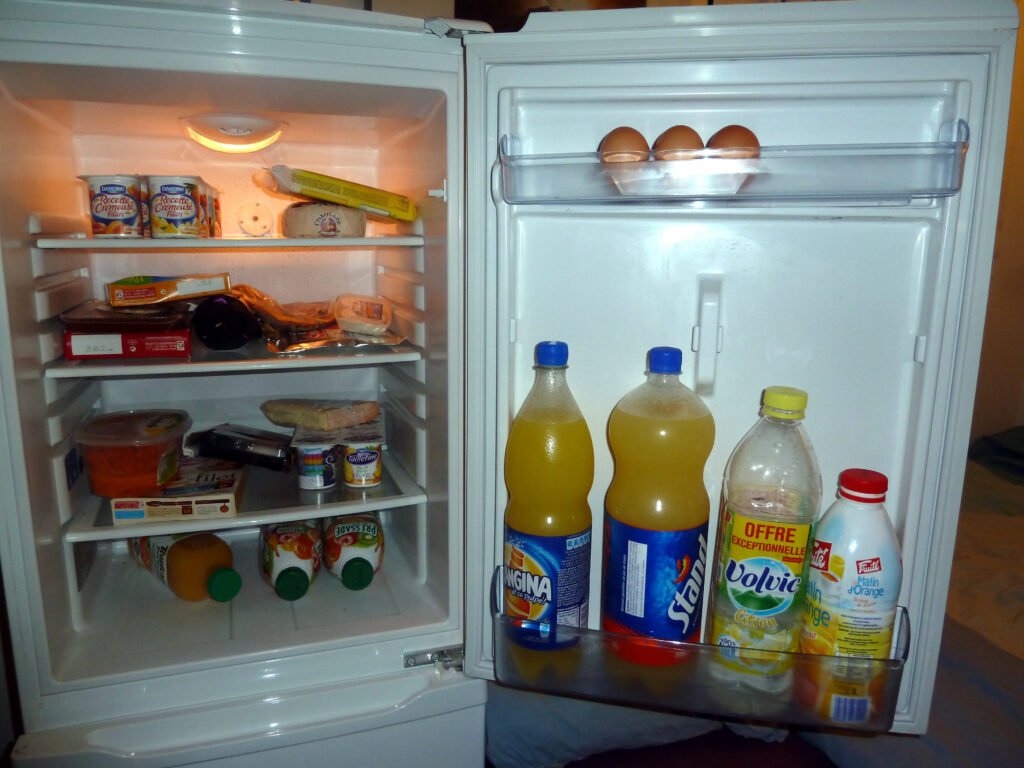
Featured photo: ‘Food into a refrigerator’ by Bretwa / Wikimedia Commons, CC0 public domain.


