Best Dehumidifier for Basement (2026): Stop Musty Smells and Mold
Last updated: November 8, 2026
Reader-supported: we may earn a commission when you buy through links on this page, at no extra cost to you. It never affects our rankings. Learn more.
Basements are naturally damp because they sit below ground, surrounded by cool soil. That moisture leads to musty smells, mildew on stored boxes, warped wood and, eventually, mold that can bother allergies and asthma. The best dehumidifier for a basement pulls that moisture out of the air and keeps humidity in the healthy range of about 30 to 50 percent.
We compared the most popular basement dehumidifiers on how quickly they remove moisture, energy use, tank size, noise and drainage options. Here are our picks for 2026.
Our top picks
| Dehumidifier | Standout feature | Score | Buy link |
|---|---|---|---|
| Midea Cube 50-Pint DehumidifierBest overall | Lift-and-twist large tank | 9.1 | Check price |
| Frigidaire 50-Pint Dehumidifier with Wi-Fi (FHDD5034Y1)Best all-rounder | Wi-Fi, ENERGY STAR | 8.8 | Check price |
| hOmeLabs 50-Pint Wi-Fi DehumidifierBest value | Low price, ENERGY STAR | 8.6 | Check price |
| AEOCKY Rhea-001Most efficient | ENERGY STAR Most Efficient 2025 | 8.5 | Check price |
| Midea Cube 50-Pint with PumpBest with built-in pump | Built-in pump | 8.2 | Check price |
The best dehumidifiers for basements, reviewed
Midea Cube 50-Pint Dehumidifier

- Capacity50 pints per day
- CoverageUp to 4,500 sq ft
- DesignLift-and-twist: extended or nested for storage
- DrainageContinuous drain hose included
- Smart featuresSmartHome app and voice assistant control
- Weight41.5 lb
- Warranty1 year
The Midea Cube is the basement dehumidifier we would buy. Its lift-and-twist design puts a large tank underneath, so you empty it less often than a typical bucket.
You can also run the included hose to a floor drain so you never empty it at all. When you are done, it nests into a compact cube for storage.
It removes 50 pints a day and covers up to 4,500 square feet. You can control it with the Midea app or a voice assistant. It lists at $274.99, but it was out of stock on Midea’s store when we checked.
What we like
- Large tank, fewer trips to the sink
- Drain hose included
- Nests for storage
- App and voice control
Watch out for
- Heavy at 41.5 lb
- 1-year warranty
- Was out of stock on Midea’s store
Best for: Most damp basements.
Skip it if: You need to pump water up to a sink.
Check price on Amazon Price range: $274.99 (out of stock on Midea’s store when we checked)
Frigidaire 50-Pint Dehumidifier with Wi-Fi (FHDD5034Y1)

- Capacity50 pints per day
- Bucket2.7 gallons
- DrainageContinuous drain option
- EfficiencyENERGY STAR certified
- Noise47 dBA on low
- Smart featuresFrigidaire app over Wi-Fi
Frigidaire’s 50-pint dehumidifier is a simple, dependable choice. It rolls on casters and connects to a hose for continuous drainage.
The FHDD5034Y1 adds Wi-Fi, so you can check and adjust humidity from the Frigidaire app. It is ENERGY STAR certified and runs at 47 dBA on low.
Its bucket holds 2.7 gallons, which is smaller than the Midea Cube’s tank. It lists at $319, but it was temporarily out of stock on Frigidaire’s site when we checked.
What we like
- ENERGY STAR certified
- Wi-Fi app
- 2.7-gallon bucket
- Continuous drain option
Watch out for
- Smaller tank than the Midea Cube
- Was out of stock on Frigidaire’s site
- Upright design is bulky
Best for: Basements with a floor drain nearby.
Skip it if: You want the largest tank.
Check price on Amazon Price range: $319
hOmeLabs 50-Pint Wi-Fi Dehumidifier

- Capacity50 pints per day (120 pints max at 95°F, 90% RH)
- CoverageUp to 7,000 sq ft
- DrainageContinuous drain option (hose sold separately)
- EfficiencyENERGY STAR certified
- ExtrasWi-Fi control, turbo mode, auto shut-off
hOmeLabs is often the cheapest way to get a full 50-pint dehumidifier. It costs $269.99 on hOmeLabs’ site.
It adds Wi-Fi control and a turbo mode that raises the fan from 188 to 218 CFM. It is ENERGY STAR certified, which helps keep running costs down.
The drain hose is sold separately, so budget for one if you want continuous draining. It shuts off on its own when the tank is full.
What we like
- Low price
- ENERGY STAR certified
- Wi-Fi control
- Turbo mode
Watch out for
- Drain hose sold separately
- No built-in pump
- Upright design is bulky
Best for: Budget buyers with typical basements.
Skip it if: You do not want to buy a hose separately.
Check price on Amazon Price range: $269.99
AEOCKY Rhea-001
- Capacity80 pints/day at 95°F, 95% RH; 56 pints/day at 86°F, 80% RH
- CoverageUp to 5,500 sq ft
- EfficiencyENERGY STAR Most Efficient 2025
- BuildCopper pipes, rotary compressor
- DrainageContinuous drain hose compatible
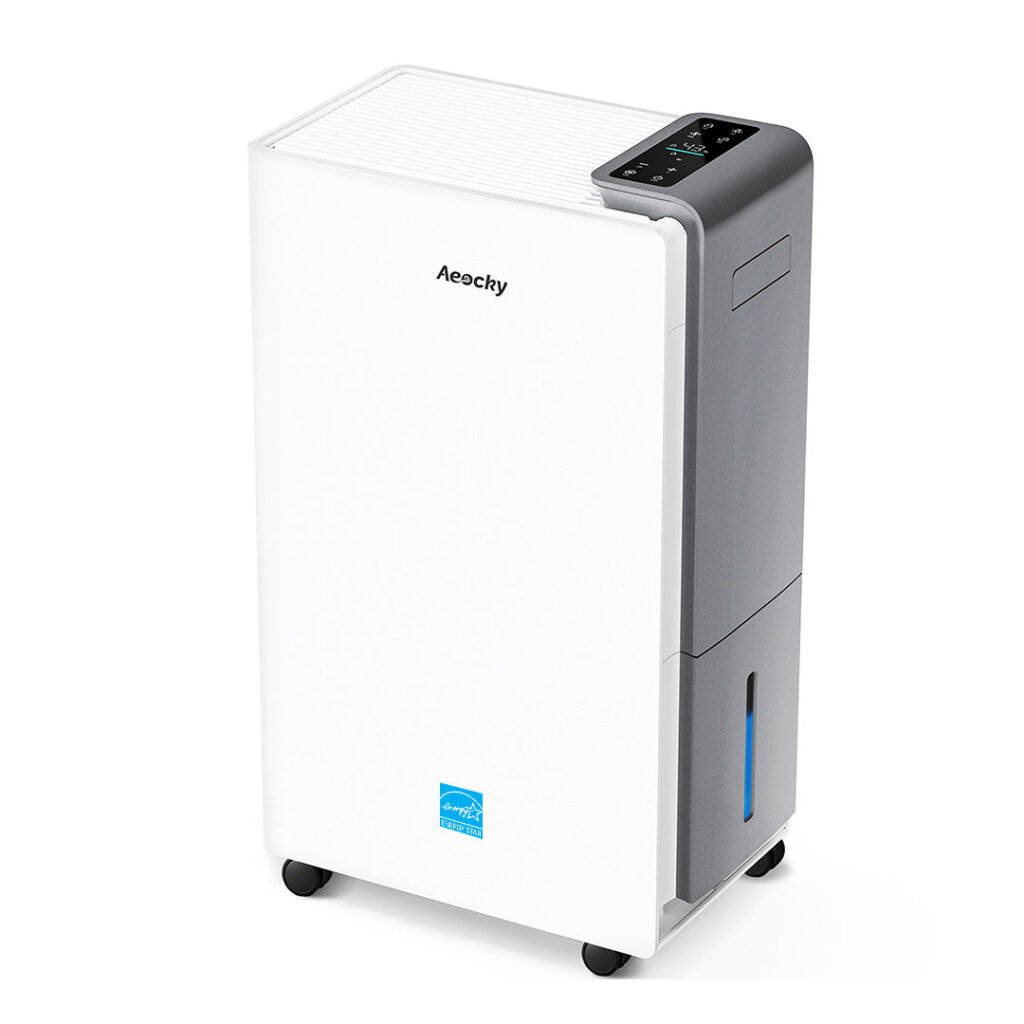
AEOCKY says the Rhea-001 earned ENERGY STAR Most Efficient 2025, a label few dehumidifiers get. That helps if it will run for many hours in a damp basement.
AEOCKY rates it at 56 pints a day in a warm, damp basement and 80 pints a day in very humid summer air. It covers up to 5,500 square feet.
It costs $299.99 on AEOCKY’s site. AEOCKY is a newer brand without the long track record of Midea or Frigidaire. The larger Rhea-003 costs $499.99.
What we like
- ENERGY STAR Most Efficient 2025
- Strong moisture removal
- Covers up to 5,500 sq ft
- Copper heat exchanger
Watch out for
- Newer brand
- No built-in pump
- Upright design is bulky
Best for: Very damp or large basements that need long run times.
Skip it if: You want a long-established brand.
Check price on Amazon Price range: $299.99
Midea Cube 50-Pint with Pump
- Capacity50 pints per day
- PumpBuilt-in pump drains out a window or into a sink
- CoverageUp to 4,500 sq ft
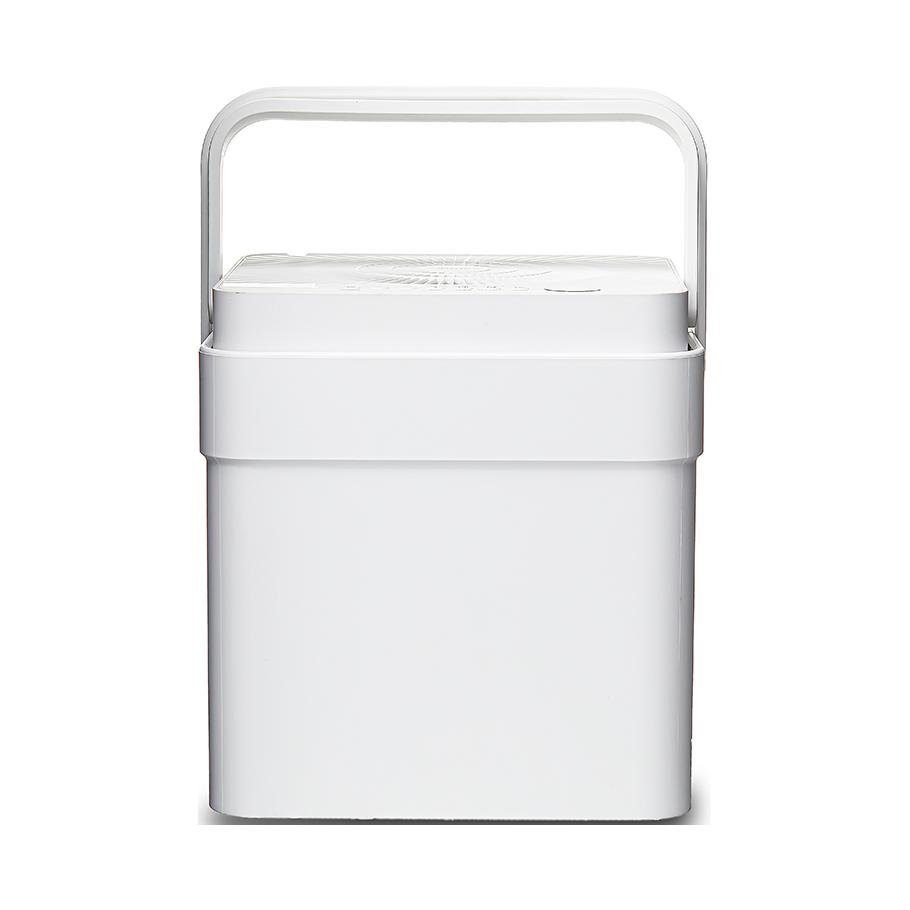
- DesignSame lift-and-twist design as the standard Cube
- ExtrasApp and voice control
If your basement has no floor drain, a built-in pump lets you push water up to a sink or out a window. You never have to carry a full bucket up the stairs.
This version of the Midea Cube adds that pump to the same lift-and-twist design as our top pick. It costs $299.99 on Midea’s site.
A pump is one more part that can wear out, so only choose this model if you really need it.
What we like
- Pumps water up to a sink or window
- Same large tank as the standard Cube
- No bucket carrying
- App control
Watch out for
- Pricier than the standard Cube
- Pump is one more part to wear out
- Heavy
Best for: Basements with no floor drain.
Skip it if: You have a floor drain nearby.
Check price on Amazon Price range: $299.99
Side-by-side comparison
| Midea Cube 50-Pint Dehumidifier | Frigidaire 50-Pint Dehumidifier with Wi-Fi (FHDD5034Y1) | hOmeLabs 50-Pint Wi-Fi Dehumidifier | AEOCKY Rhea-001 | Midea Cube 50-Pint with Pump | |
|---|---|---|---|---|---|
| Best for | Best overall | Best all-rounder | Best value | Most efficient | Best with built-in pump |
| Capacity | 50 pints/day | 50 pints/day | 50 pints/day | 56 pints/day (86°F) | 50 pints/day |
| Built-in pump | No | No | No | No | Yes |
| Wi-Fi | Yes | Yes | Yes | See AEOCKY | Yes |
| Drain hose included | Yes | See Frigidaire | No | See AEOCKY | Yes |
| Price | $274.99 (out of stock on Midea’s store when we checked) | $319 | $269.99 | $299.99 | $299.99 |
| Our score | 9.1 | 8.8 | 8.6 | 8.5 | 8.2 |
What size dehumidifier do you need for a basement?
For most basements, choose a 50-pint model (using the Department of Energy’s 2019 rating method). A larger unit dries the air faster and cycles on and off less, which saves energy and helps the compressor last longer. Smaller 20- to 35-pint models are better for bedrooms and bathrooms.
- Up to about 1,000 sq ft, moderately damp: 35 to 50 pints.
- 1,000 to 2,500 sq ft or musty smell: 50 pints.
- Very wet or larger basements: 50 pints with continuous drainage, or a whole-home unit.
How to choose a basement dehumidifier
1. Plan the drainage
A basement dehumidifier can fill its bucket more than once a day. Connecting a hose to a floor drain lets it run nonstop. With no drain nearby, choose a model with a built-in pump or buy a separate condensate pump.
2. Look at energy efficiency
A dehumidifier may run for hundreds of hours a year. Energy Star models and those with strong liters-per-kWh results cost less to run.
3. Check the humidity sensor
The dehumidifier uses its built-in sensor to turn on and off. An accurate sensor keeps your basement at your target humidity without wasting energy.
4. Consider low-temperature operation
Unfinished basements can be cool. Look for automatic defrost so the coils do not ice up when the room is below about 65°F.
5. Think about noise
If your basement is a living space or home office, pick a quieter model and use the lower fan speed once humidity is under control.
Tips for a drier basement
- Set the dehumidifier to about 45 to 50 percent humidity.
- Keep doors and windows closed while it runs.
- Clean the air filter every few weeks.
- Point gutters and downspouts away from the foundation.
- Use a cheap hygrometer in another corner to check the whole basement is dry.
- If water is leaking in, fix the source; a dehumidifier cannot stop flooding.
Frequently asked questions
What humidity should a basement be?
Aim for about 30 to 50 percent relative humidity. Above 60 percent, mold and dust mites grow much more easily.
How long should I run a dehumidifier in the basement?
Let it run on its humidity setting. At first it may run for most of the day, then cycle on and off once the basement dries out. Many homeowners run it year-round, especially in humid summers.
Where should I put a dehumidifier in the basement?
Place it in the center of the dampest area, at least a foot from walls and furniture, with the doors to other rooms closed. If you use a drain hose, place it near the floor drain.
Is a 50-pint dehumidifier too big for my basement?
Rarely. A 50-pint unit dries a basement faster and then turns off, which can use less energy than a small unit that runs constantly.
Can a dehumidifier get rid of mold?
A dehumidifier helps prevent mold by keeping humidity low, but it does not remove existing mold. Clean visible mold safely or hire a professional for large areas, then use the dehumidifier to stop it coming back.
How much does it cost to run a basement dehumidifier?
A 50-pint dehumidifier draws roughly 500 watts while running. Your cost depends on your electricity rate and how many hours it runs; an energy-monitoring smart plug can show you the exact cost.
The bottom line
For most homes, the Midea Cube 50-Pint is the best dehumidifier for a basement, thanks to its large lift-and-twist tank and included drain hose. Choose the Frigidaire 50-Pint for a simple all-rounder, hOmeLabs on a budget, the AEOCKY Rhea-001 for top efficiency, or the Midea Cube with Pump if you have no floor drain.
Protect your basement further with the best water leak detectors with phone alerts, browse all Air Quality guides, or ask us a question.
Sources
- Midea: 50 pt. Cube Dehumidifier
- Midea: 50 pt. Cube with Built-in Pump
- Frigidaire: FHDD5034Y1
- hOmeLabs: 50 Pint Wi-Fi Dehumidifier
- AEOCKY: Rhea Series
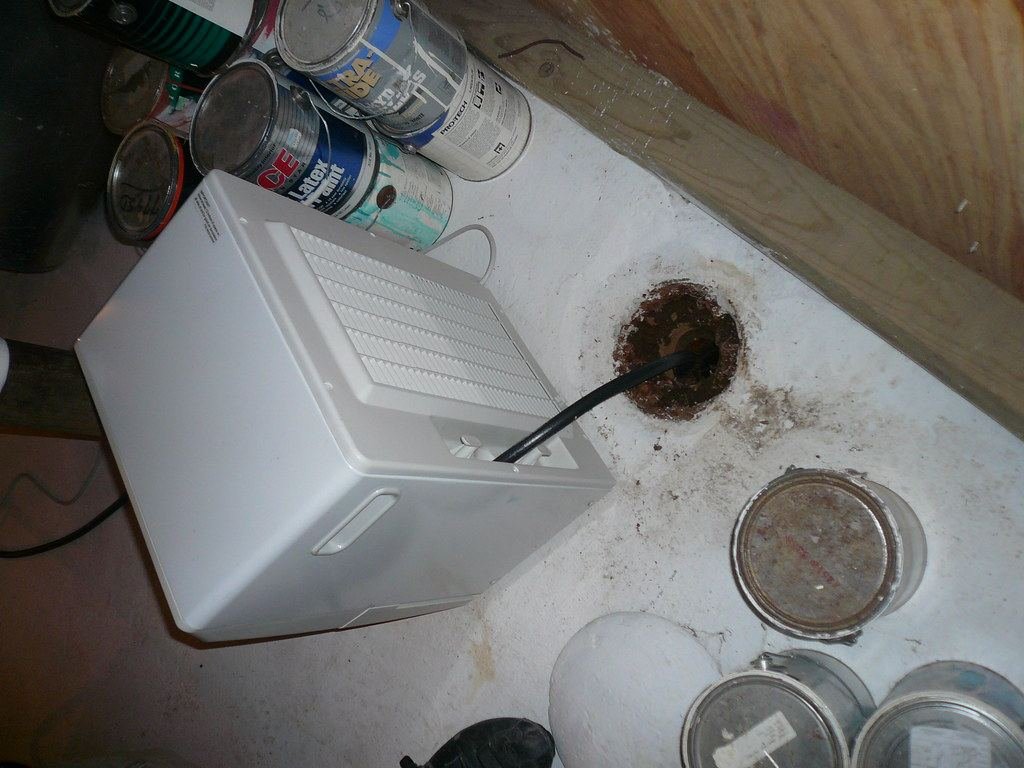
Featured photo: ‘Amy’s Basement Dehumidifier’ by Rex Roof, licensed under CC BY 2.0.