Best Radon Detector for Home (2026): 5 Top Picks
Last updated: November 8, 2026
Reader-supported: we may earn a commission when you buy through links on this page, at no extra cost to you. It never affects our rankings. Learn more.
Radon is a radioactive gas that seeps up from the soil into homes. You cannot see, smell or taste it, and the U.S. EPA ranks it as the leading cause of lung cancer among people who have never smoked. The only way to know your level is to test, and the best radon detector keeps testing around the clock so you see the changes from season to season.
We compared the most popular home radon monitors and test kits on accuracy, how fast they give a first reading, ease of use, app and Wi-Fi features, and running costs. Here are our picks for 2026.

Our top picks
| Radon detector | First reading | Score | Buy link |
|---|---|---|---|
| Ecosense RadonEye RD200Best overall | About 1 hour | 9 | Check price |
| Airthings Corentium Home 2Best simple, no-app monitor | About 24 hours | 8.8 | Check price |
| Ecosense EcoQubeBest Wi-Fi radon monitor | About 10 minutes, reliable in about 1 hour | 8.6 | Check price |
| Airthings Wave RadonBest battery-powered smart monitor | About 24 hours | 8.3 | Check price |
| Short-term charcoal radon test kitBest budget one-time test | Lab result in about 1 to 2 weeks | 7.8 | Check price |
The best radon detectors, reviewed
Ecosense RadonEye RD200
- ReadingsFirst reading in about 10 minutes, reliable result in about 1 hour
- DisplayBuilt-in OLED screen
- ConnectivityBluetooth app
- PowerPlug-in
- FeesNo subscription or lab fees
RadonEye is the monitor we would buy for most homes. Ecosense says its sensor is 15 times more sensitive than the industry minimum. You get a first reading in about 10 minutes and a reliable result in about an hour, and it keeps updating every 10 minutes. That makes it easy to see how radon rises overnight, after heavy rain or when the heating comes on. It is on the C-NRPP list of approved consumer radon monitors, and it has a built-in alarm for high levels. The free app stores history over Bluetooth, but there is no Wi-Fi, so you only see new data when your phone is nearby.
What we like
- Very fast first reading
- Highly sensitive, accurate sensor
- Clear on-device display
- No fees
Watch out for
- Bluetooth only, no remote alerts
- Needs to stay plugged in
- Expected service life of about 5 years
Best for: Anyone who wants fast, trustworthy radon readings for a basement or main floor.
Skip it if: You want phone alerts while you are away from home.
Check price on Amazon Price range: $$
Airthings Corentium Home 2
- Readings24-hour, 7-day, 30-day and long-term averages
- DisplayLCD screen
- ConnectivityOptional Bluetooth app; remote access with an Airthings Hub
- Power2 AA batteries, up to 3 years
- FeesNo subscription or lab fees
The Corentium Home 2 is the easiest radon monitor to live with. Put in the batteries, set it on a shelf and read the screen. It shows a 24-hour average plus longer-term averages, which is how radon risk is actually judged. It uses the same Airthings sensor as the company’s professional devices. This version adds Bluetooth, temperature and humidity readings, and runs on 2 AA batteries for up to 3 years (about 1.5 years if you use Bluetooth often). It is slower than RadonEye: the first 24-hour average takes a day. For alerts away from home you need an Airthings Hub.
What we like
- Very easy to use
- Long battery life, no outlet needed
- Shows short- and long-term averages
- Proven accuracy
Watch out for
- First reading takes about a day
- Remote alerts need an extra Airthings Hub
- Less detail than RadonEye
Best for: People who want a set-and-forget monitor with a screen.
Skip it if: You want results within the hour.
Check price on Amazon Price range: $$
Ecosense EcoQube
- ReadingsLive readings every 10 minutes
- DisplayStatus light, readings in app
- ConnectivityWi-Fi (2.4 GHz) required
- PowerPlug-in
- FeesNo subscription
EcoQube uses the same kind of fast, sensitive sensor as RadonEye but adds Wi-Fi, so you can check your basement and get alerts from anywhere. Ecosense says it shows a first reading in about 10 minutes and a reliable result within about an hour. The app shows daily, weekly, monthly and yearly averages, which helps you see whether a mitigation system is working. It also works with IFTTT. There is no number on the device itself, only a color light, and it needs 2.4 GHz Wi-Fi to keep recording.
What we like
- Remote readings and alerts over Wi-Fi
- Fast, sensitive sensor
- Helpful trend charts
- No subscription
Watch out for
- No numeric display on the device
- Stops recording if Wi-Fi goes down
- Must stay plugged in
Best for: Owners who want to check radon remotely, including landlords and rental owners.
Skip it if: You prefer a screen you can read without a phone.
Check price on Amazon Price range: $$
Airthings Wave Radon
- ReadingsRadon, temperature and humidity
- DisplayWave in front for a color light; readings in app
- ConnectivityBluetooth; Wi-Fi with Airthings Hub
- PowerBatteries, rated up to about 1.5 years
- FeesNo subscription
The Wave Radon is a sleek, battery-powered smart monitor that mounts on a wall or ceiling. Wave your hand in front of it and a light glows green, yellow or red to show your radon level, and the app gives full history. It also tracks temperature and humidity. Airthings rates it at about 10% accuracy after 7 days and about 5% after 2 months. For remote access, you need the separate Airthings Hub.
What we like
- Cable-free, mounts anywhere
- Simple color-light readout
- Good app and history
- Also tracks humidity
Watch out for
- Needs about a week for a reliable average
- Remote access needs an extra hub
- No numbers on the device
Best for: Smart-home fans who want a clean, wireless monitor.
Skip it if: You want a fast reading or a built-in display.
Check price on Amazon Price range: $$
Short-term charcoal radon test kit
- ReadingsOne 2- to 4-day average
- DisplayNone, mailed to a lab
- ConnectivityNone
- PowerNone
- FeesLab fee sometimes extra
A charcoal test kit from a hardware store is the cheapest way to get a first answer. You leave it open in your lowest lived-in room for a few days, seal it and mail it to the lab. It gives a single snapshot, not ongoing monitoring, and radon changes a lot from day to day, so one test can be misleading. Pick a kit that includes the lab fee and return postage, and mail it back right away, because delays can skew the result.
What we like
- Lowest up-front cost
- Lab-analyzed result
- Good first check before buying a monitor
Watch out for
- Only a single snapshot
- Wait for lab results
- Lab fee and postage may be extra
Best for: A quick first test, or a second opinion on a monitor reading.
Skip it if: You want to watch radon over time or check a mitigation system.
Check price on Amazon Price range: $
Side-by-side comparison
| Ecosense RadonEye RD200 | Airthings Corentium Home 2 | Ecosense EcoQube | Airthings Wave Radon | Short-term charcoal radon test kit | |
|---|---|---|---|---|---|
| Best for | Best overall | Best simple, no-app monitor | Best Wi-Fi radon monitor | Best battery-powered smart monitor | Best budget one-time test |
| Type | Continuous monitor | Continuous monitor | Continuous monitor | Continuous monitor | One-time lab test |
| First reading | About 10 min (reliable in 1 hour) | About 24 hours | About 10 min to 1 hour | About 24 hours | 1-2 weeks (lab) |
| Display | Yes | Yes (LCD) | No (app) | Color light | No |
| Wi-Fi alerts | No | With hub | Yes | With hub | No |
| Power | Plug-in | Batteries | Plug-in | Batteries | None |
| Price | $$ | $$ | $$ | $$ | $ |
| Our score | 9 | 8.8 | 8.6 | 8.3 | 7.8 |
How to choose a radon detector
1. Pick a continuous monitor for ongoing peace of mind
Radon levels swing from hour to hour and season to season. A continuous electronic monitor shows these changes and keeps watching for years, with no lab fees. A one-time charcoal kit is cheaper but only gives a snapshot.
2. Look for a fast, sensitive sensor
Units such as RadonEye and EcoQube give a useful reading in about an hour. Most other home monitors need a day for the first number and up to a week or more to settle.
3. Decide whether you need remote access
Bluetooth monitors only update when your phone is nearby. If you want alerts while you are away, or you manage a rental, choose a Wi-Fi model.
4. Place it in the right spot
Test in the lowest level of the home that people use regularly, such as a finished basement or ground-floor bedroom. Keep the monitor about 20 inches off the floor, away from drafts, windows, vents and sump pits, and away from heat or humidity sources such as kitchens and bathrooms.
5. Judge by long-term averages
Do not panic over a single spike. Radon risk is based on long-term average exposure, so look at the weekly, monthly and yearly averages your monitor reports.
What your radon readings mean
In the U.S., radon is measured in picocuries per liter of air (pCi/L). The EPA recommends fixing your home if the long-term average is 4 pCi/L or higher, and suggests considering a fix between 2 and 4 pCi/L, since there is no known safe level. The average U.S. indoor level is about 1.3 pCi/L. Outside the U.S., readings are often shown in becquerels per cubic meter (Bq/m³); 4 pCi/L is about 148 Bq/m³.
- Below 2 pCi/L: keep monitoring, especially through the winter.
- 2 to 4 pCi/L: consider ways to lower radon, and keep a close eye on the trend.
- 4 pCi/L or higher: contact a certified radon mitigation professional. A typical sub-slab system lowers levels a lot and usually costs about as much as other common home repairs.
- After mitigation: keep a monitor running to confirm the system is working.
Frequently asked questions
Are home radon detectors accurate?
Good continuous monitors are accurate enough for homeowners to track their levels, especially over days and weeks. Models such as the RadonEye and Airthings Corentium are listed by the Canadian National Radon Proficiency Program. For a home sale or a high reading, confirm with a certified professional test.
Where should I put a radon detector?
In the lowest lived-in level of your home, about 20 inches above the floor, away from windows, doors, vents, sump pits, kitchens and bathrooms.
How long should I test for radon?
A short-term test runs 2 to 90 days. Because radon changes with the weather and seasons, a long-term average of 90 days or more gives the most reliable picture. Continuous monitors make long-term testing easy.
Do I need to test if I live in a low-radon area?
Yes. Radon levels can be very different from one house to the next, even on the same street. The EPA recommends testing every home below the third floor.
Do new homes have radon?
They can. New, tightly sealed homes can trap radon. Some new homes include a passive radon pipe, but you still need to test to know your level.
Can an air purifier remove radon?
No. Standard air purifiers do not lower radon gas. The proven fix is a radon mitigation system that vents the gas from under the foundation to the outside.
The bottom line
For most homes, the Ecosense RadonEye RD200 is the best radon detector, with fast, accurate readings and no fees. Choose the Airthings Corentium Home 2 for a simple battery-powered monitor with a screen, the Ecosense EcoQube for Wi-Fi alerts, the Airthings Wave Radon for a sleek smart-home option, or a charcoal test kit for a low-cost first check.
More for a healthier home: see the best dehumidifier for a basement, the best smart smoke and carbon monoxide detector, or browse all Air Quality guides.
Sources
- U.S. EPA: health risk of radon
- U.S. EPA: A Citizen’s Guide to Radon
- C-NRPP: certified radon measurement devices
- Bob Vila: best radon test kits, tested
- SafeWise: best radon detectors
- Ecosense: EcoQube product details
- Airthings: Wave Radon product details
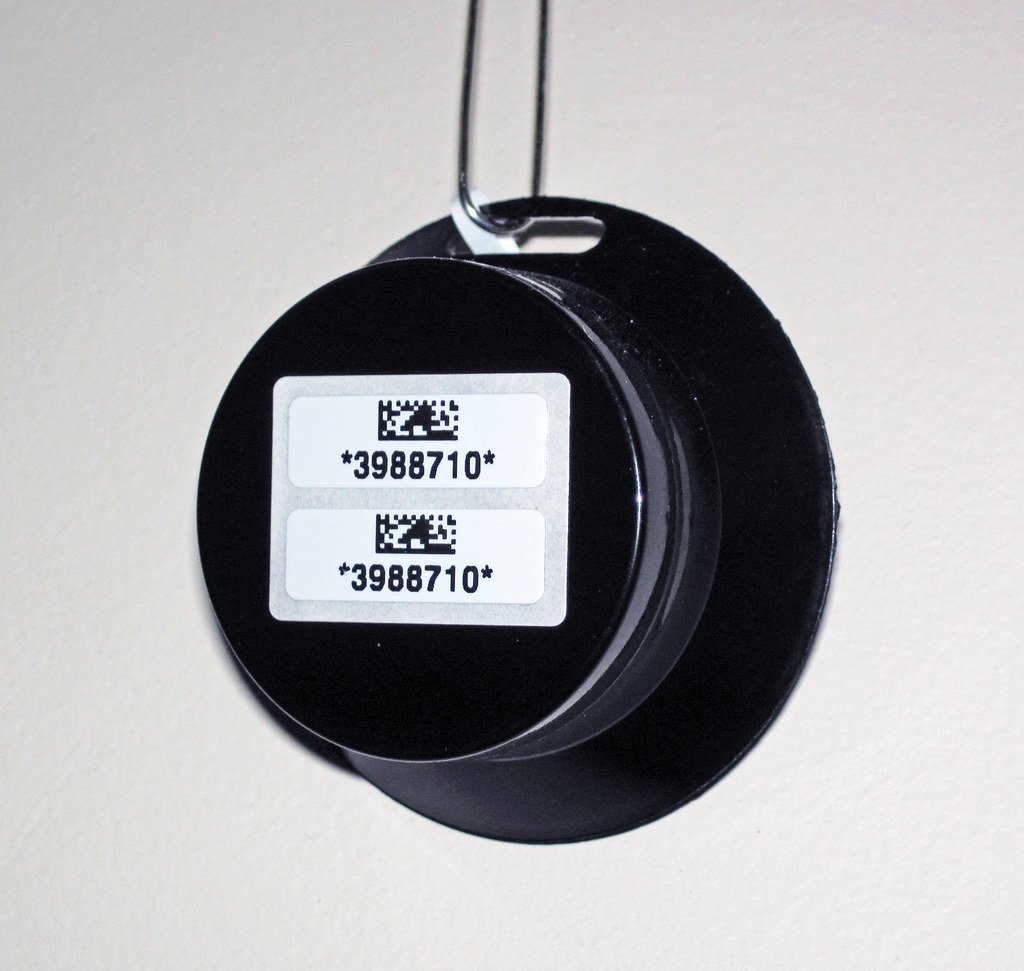
Featured photo: ‘Radon gas detector’ by James St. John, licensed under CC BY 2.0.