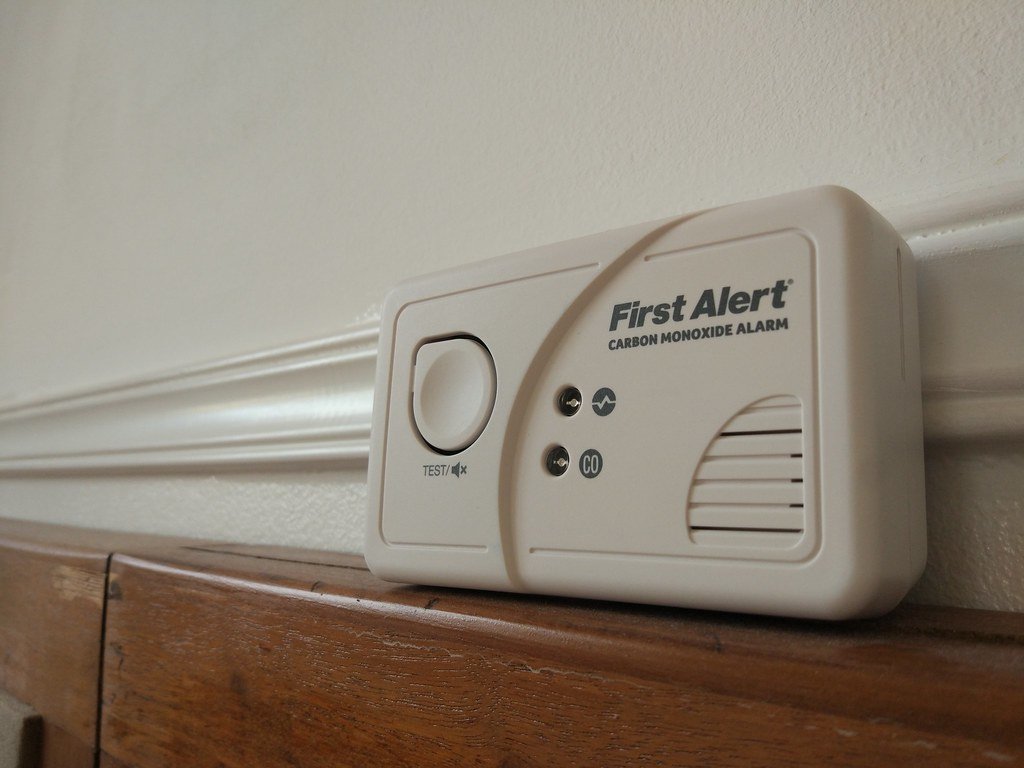
Best Carbon Monoxide Detector (2026): 4 Picks With Digital Displays
Last updated: November 8, 2026
Reader-supported: we may earn a commission when you buy through links on this page, at no extra cost to you. It never affects our rankings. Learn more.
Carbon monoxide (CO) is a colorless, odorless gas made when fuels like gas, oil, wood or propane burn. A faulty furnace, a blocked chimney, a car running in an attached garage or a generator too close to the house can fill a home with CO, and early symptoms feel like the flu. The CDC reports that hundreds of people die every year in the U.S. from accidental CO poisoning. The best carbon monoxide detector is UL listed, sounds a loud alarm early, and shows a digital reading so you can spot rising levels.
We compared the most popular standalone CO alarms on digital displays, power source and battery backup, sealed 10-year batteries, peak-level memory, UL 2034 listing and price. Here are our picks for 2026.

Our top picks
| CO detector | Power | Score | Buy link |
|---|---|---|---|
| Kidde KN-COPP-3 Plug-In CO AlarmBest overall | Plug-in with 9V battery backup | 9 | Check price |
| First Alert CO3-P01DBest runner-up | Plug-in with AA battery backup | 8.8 | Check price |
| Kidde C3010D 10-Year Sealed Battery CO AlarmBest battery-only alarm | 10-year sealed battery | 8.7 | Check price |
| First Alert CO5-B10DBest tabletop and travel pick | 10-year sealed battery | 8.5 | Check price |
The best carbon monoxide detectors, reviewed
Kidde KN-COPP-3 Plug-In CO Alarm

- PowerPlug-in with 9V battery backup
- DisplayAlways-on CO reading, 30 to 999 ppm
- MemoryPeak level memory from 11 ppm
- MountingDirect plug, 6-foot cord or tabletop
- Life10-year life and 10-year limited warranty
Kidde’s KN-COPP-3 plugs into an outlet and keeps working on a 9V backup battery when the power goes out. Its red digital screen shows the CO level in parts per million, starting at 30 ppm.
The peak level button shows the highest reading since the last reset, down to 11 ppm. That helps you spot a slow leak that happened while you were out. You can plug it straight in, use the 6-foot cord, or stand it on a table.
What we like
- Always-on ppm display
- Peak memory from 11 ppm
- Cord or tabletop options
- 10-year warranty
Watch out for
- Uses a 9V backup battery
- Needs a free outlet
- Sits low if plugged in directly
Best for: Bedrooms and hallways with an outlet.
Skip it if: You want a wire-free alarm.
Check price on Amazon Price range: See retailers
First Alert CO3-P01D

- PowerPlug-in with 2 AA battery backup
- DisplayBacklit; shows power status, and the CO level when CO is detected
- MemoryStores the highest CO level recorded
- ListingConforms to UL 2034
- Warranty7-year limited
The CO3-P01D is First Alert’s new plug-in CO alarm, and it takes over from the popular CO615, which First Alert has discontinued. It runs on outlet power and switches to two AA batteries in an outage. You can plug it in directly or use the optional 6-foot cord.
The backlit screen lights up when you press a button or when the alarm goes off. It shows the CO level once CO is detected and saves the highest level recorded, which can help emergency crews. Unlike the Kidde, it does not show a reading all the time.
What we like
- AA battery backup
- Backlit screen
- Saves the peak CO level
- Optional 6-foot cord
Watch out for
- Screen is not always on
- Needs a free outlet
- Shorter 7-year warranty
Best for: First Alert fans who want a simple plug-in alarm.
Skip it if: You want a constant ppm reading.
Check price on Amazon Price range: See retailers
Kidde C3010D 10-Year Sealed Battery CO Alarm
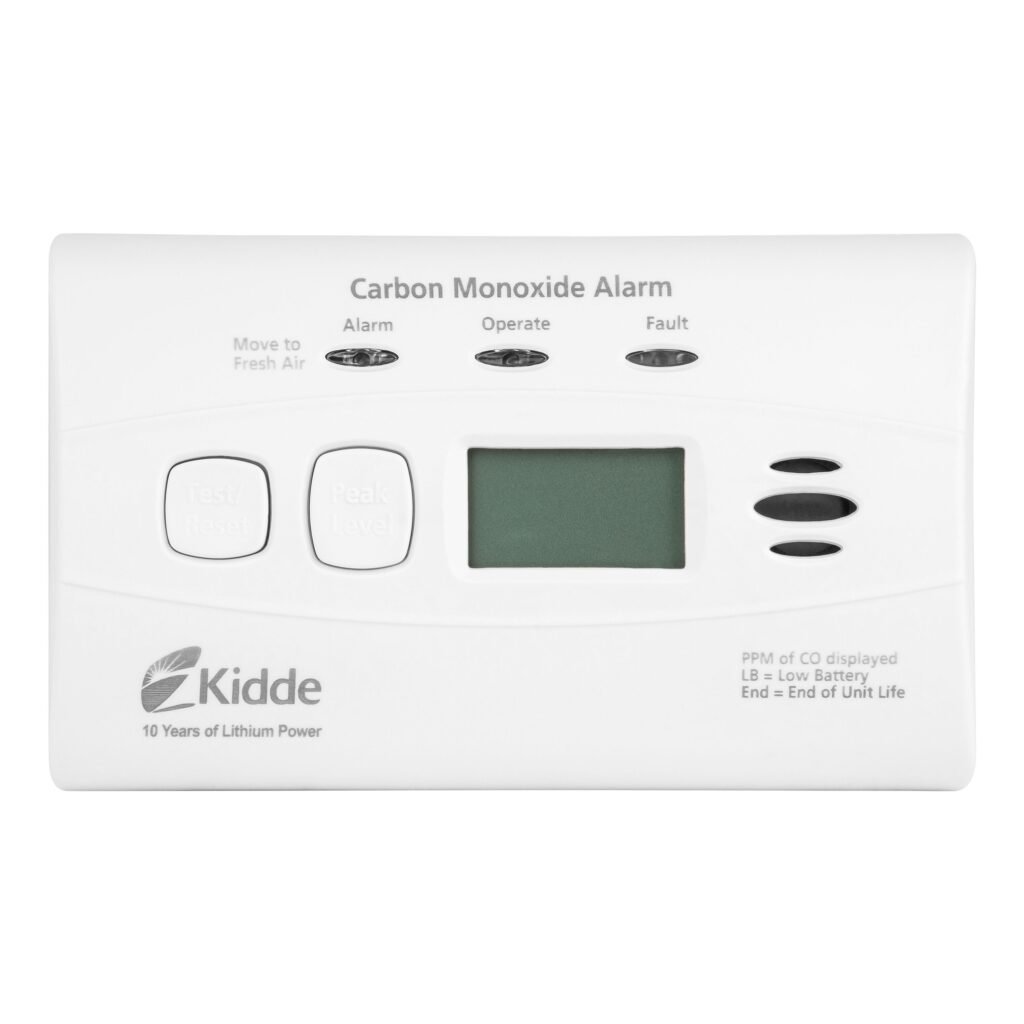
- Power10-year sealed lithium battery
- DisplayCO level in ppm (30 to 999), updated every 15 seconds
- MemoryPeak level memory from 11 ppm
- SetupTurns on when you attach it to its bracket
- Life10-year life and limited warranty
A sealed 10-year battery means no battery changes and no outlet needed, so you can mount the C3010D anywhere on a wall. It switches on by itself when you attach it to its mounting bracket.
The screen shows the CO level in ppm and updates every 15 seconds, and peak level memory records the highest reading. When its 10 years are up, it chirps to tell you to replace it.
What we like
- No battery changes for 10 years
- Mount anywhere
- ppm display
- Peak level memory
Watch out for
- Higher up-front cost
- Replace the whole unit after 10 years
- No outlet power
Best for: Rooms without convenient outlets.
Skip it if: You want the lowest price.
Check price on Amazon Price range: See retailers
First Alert CO5-B10D

- Power10-year sealed lithium battery
- DisplayRoom temperature, plus the CO level when CO is detected
- MemoryShows the peak CO level
- PlacementSits on a table or shelf; no installation
- Warranty10-year limited; conforms to UL 2034
The CO5-B10D replaces First Alert’s CO710, which is now discontinued. It is made to sit on a table or shelf, so there is nothing to install, and it is small enough to pack for a hotel or vacation rental.
In standby, the backlit screen shows the room temperature. When CO is detected, it shows the CO level and keeps the peak reading. The sealed 10-year battery means no battery changes and no low-battery chirps.
What we like
- No installation
- Easy to travel with
- 10-year sealed battery
- Shows temperature too
Watch out for
- Designed for tabletops, not walls
- Replace the whole unit after 10 years
- CO level shows only when detected
Best for: Renters, travelers and shelves near bedrooms.
Skip it if: You want an alarm mounted on the wall.
Check price on Amazon Price range: See retailers
Side-by-side comparison
| Kidde KN-COPP-3 Plug-In CO Alarm | First Alert CO3-P01D | Kidde C3010D 10-Year Sealed Battery CO Alarm | First Alert CO5-B10D | |
|---|---|---|---|---|
| Best for | Best overall | Best runner-up | Best battery-only alarm | Best tabletop and travel pick |
| Power | Plug-in + 9V battery | Plug-in + 2 AA | 10-year battery | 10-year battery |
| Digital display | Always on (ppm) | When CO is detected | Always on (ppm) | Temperature; CO when detected |
| Peak memory | Yes | Yes | Yes | Yes |
| UL 2034 | Yes | Yes | Yes | Yes |
| Price | See retailers | See retailers | See retailers | See retailers |
| Our score | 9 | 8.8 | 8.7 | 8.5 |
How to choose a carbon monoxide detector
1. Look for UL 2034
UL 2034 is the safety standard for residential CO alarms. Check the package or listing.
2. Get a digital display
A display shows low and rising CO levels before the alarm sounds, and peak memory reveals problems that happened while you were away.
3. Choose the right power
Plug-in alarms with battery backup are inexpensive. Sealed 10-year battery alarms can go anywhere and need no battery changes. Hardwired alarms can be interconnected.
4. Consider combo or smart alarms
Combination smoke and CO alarms save space, and smart alarms send alerts to your phone. See our guide to smart smoke and CO detectors.
5. Plan to replace them
CO sensors wear out. Most alarms need replacing every 7 to 10 years, and they chirp to warn you.
Where to install CO alarms
The NFPA and CPSC recommend placing CO alarms to wake everyone in time:
- Install a CO alarm on every level of the home, including the basement.
- Put one outside each sleeping area, and inside bedrooms if fuel-burning appliances are nearby.
- Follow the maker’s height instructions; CO mixes with air, so wall, outlet or ceiling placement can all work.
- Keep alarms at least 15 feet from fuel-burning appliances to reduce false alarms, and away from bathrooms and direct sunlight.
- Test alarms monthly and replace them at the end of their life.
Preventing CO poisoning
Alarms are the backup. Preventing CO in the first place matters most:
- Have your furnace, water heater and any fuel-burning appliances checked by a professional every year.
- Never run a car, generator or grill inside a home or garage, even with the door open.
- Keep generators at least 20 feet from the house.
- Make sure chimneys and vents are clear of snow, nests and debris.
Frequently asked questions
Do I need a carbon monoxide detector?
Yes, if your home has fuel-burning appliances, a fireplace or an attached garage. Many states require them by law.
Where should I put a carbon monoxide detector?
On every level, outside each sleeping area, and following the maker’s height instructions.
What CO level is dangerous?
Alarms are designed to sound before levels become life-threatening, based on both concentration and time. Any reading on the display is a reason to investigate, and an alarm means get out.
How long do CO detectors last?
Most last 7 to 10 years. They chirp or show an end-of-life message when they need replacing.
Can a smoke detector detect carbon monoxide?
Only if it is a combination smoke and CO alarm. Standard smoke alarms do not detect CO.
What should I do if my CO alarm goes off?
Get everyone, including pets, outside to fresh air right away and call 911. Do not go back in until responders say it is safe.
The bottom line
For most homes, the Kidde KN-COPP-3 is the best carbon monoxide detector, with an always-on ppm display, battery backup and peak memory. Choose the First Alert CO3-P01D as a plug-in alternative, the Kidde C3010D to skip outlets and battery changes, or the First Alert CO5-B10D for a tabletop alarm you can travel with.
More for fire and home safety: see the best smart smoke and carbon monoxide detector, the best inverter generator for home, or browse all Fire, Water and Emergency guides.
Sources
- CDC: carbon monoxide poisoning basics
- CPSC: Carbon Monoxide Information Center
- NFPA: carbon monoxide safety
- Kidde: KN-COPP-3
- First Alert: CO3-P01D
- Kidde: C3010D
- First Alert: CO5-B10D
Featured photo: ‘Carbon monoxide detector on a wall’ by abegum, licensed under CC BY 2.0.